
1,000 sites. One installation standard.
Supplying, installing, and commissioning Lithium Iron Phosphate (LFP) energy storage across 1,000 distributed sites along a 600-kilometer corridor in Uttar Pradesh. How a standardized engineering model, cluster-based field crews, and time-stamped digital audits delivered the thousandth installation to the exact same drawing as the first.
Delivered by Zyntra. Terragreen is the energy infrastructure and project implementation business of Terrakraft India, which also owns Zyntra. Terragreen deploys this proven field delivery model across commercial, industrial, and critical-power client projects.
Many dispersed locations, harsh operating environments, and zero margin for error
Delivering five large solar or battery installations in a single industrial park is an engineering task. Delivering 1,000 energy storage installations across hundreds of separate rural and semi-urban districts is a logistical and quality-control challenge.
The project environment presented four severe operational hurdles:
Geographic Dispersion
Sites were spread across eastern and western Uttar Pradesh—from Bijnor in the north to Pratapgarh in the south—spanning road-access-only rural locations far from central depots.
Extreme Environmental Stress
Equipment was retrofitted into existing, actively used cooperative office rooms. Systems operate in unconditioned spaces subject to ambient summer temperatures exceeding +45 °C, fine dust, and monsoon humidity.
Unstable Grid Feeders
Rural distribution lines subjected equipment to chronic low voltage, frequent single-phasing, voltage surges, and multiple daily outages requiring deep battery cycling.
No On-Site Technical Staff
Facilities are managed by administrative staff without electrical training. Equipment had to operate completely unattended, with automated hardware protection and zero routine maintenance requirements.
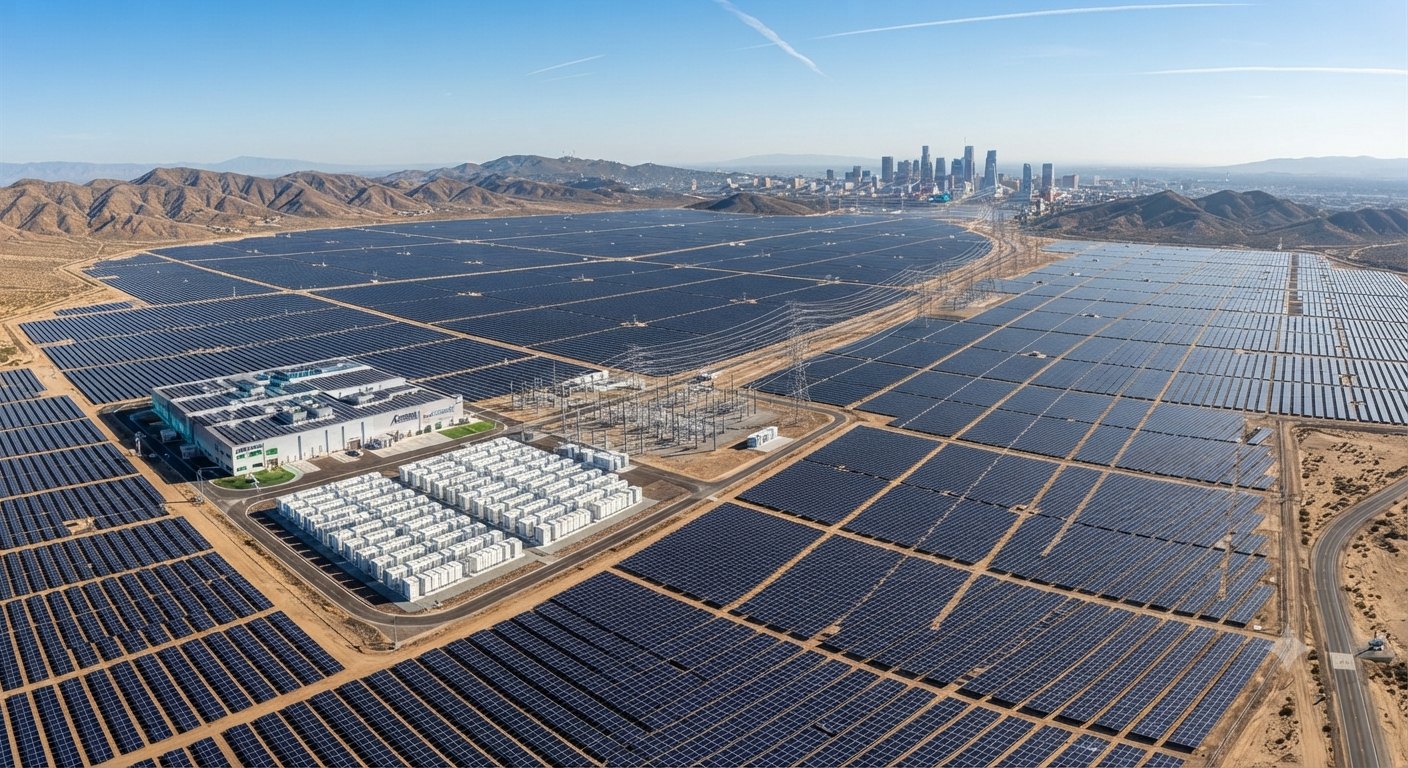
Energy that stays on.
The thousandth installation, built to the exact same drawing as the first.
How the standard held from Site 1 to Site 1,000
Quality in multi-site infrastructure cannot rely on the individual skill or mood of whoever arrives in the truck. It requires an engineered installation system that eliminates field discretion.
Pillar 1: A Standardized Mounting Specification
Every installation followed an exact engineering drawing specified in advance:
- Uniform Elevation & Spacing: Inverter wall-mounting heights, cable tray elevations, and floor-standing battery enclosure clearances were identical across all 1,000 locations.
- Pre-Engineered Cable Entries: Standardized conduit runs, bottom-entry cable glands, and pre-crimped wiring harnesses eliminated ad-hoc field wiring and improper terminations.
- Passive Thermal Envelope: Wall clearances were engineered to maximize convective airflow around inverter heatsinks, ensuring passive heat dissipation without depending on external cooling fans.
Pillar 2: Cluster-Based Field Operations
Districts were divided into operational clusters of 30 to 50 sites, supported by regional supply hubs:
- Dedicated crews: Each cluster was manned by a trained, dedicated installation team led by a supervising electrical engineer.
- Sequential execution: Work was executed sequentially, allowing crews to refine site turnover times while maintaining standardized build checklists.
- Cloned teams: Rather than stretching management across the state, capacity was expanded by deploying cloned, identically trained cluster teams.
Pillar 3: Physical Safety Fitted at Every Site
In unmanned public facilities, safety cannot be an optional add-on:
- Hardware Isolation: Dedicated double-pole DC isolators and AC circuit breakers allowed total physical disconnection during maintenance.
- Surge Protection: Heavy-duty Type II Surge Protection Devices (SPDs) were installed on incoming and outgoing lines to protect electronics from grid lightning spikes.
- Inherent Chemistry Safety: Packs utilized Lithium Iron Phosphate (LiFePO4) prismatic cells, thermally stable up to +270 °C, backed by autonomous hardware-level BMS over-voltage and over-temperature cutoffs.
Pillar 4: Geo-Tagged, Time-Stamped Handover Verification
Commissioning was completed only after formal verification:
- Photographic record: Field crews documented completed installations using high-resolution, GPS-tagged digital photographs capturing serial numbers, conduit runs, earthing connections, and meter readings.
- Handover plaque: An anodized, tamper-evident metal handover plaque was mounted directly above each system, recording site ID, commissioning date, and system capacity.
The same installation quality, districts apart
True delivery discipline is visible in unretouched field photography. Despite varying wall conditions, floor spaces, and building ages, every installation maintained identical mounting geometry and electrical safety standards:
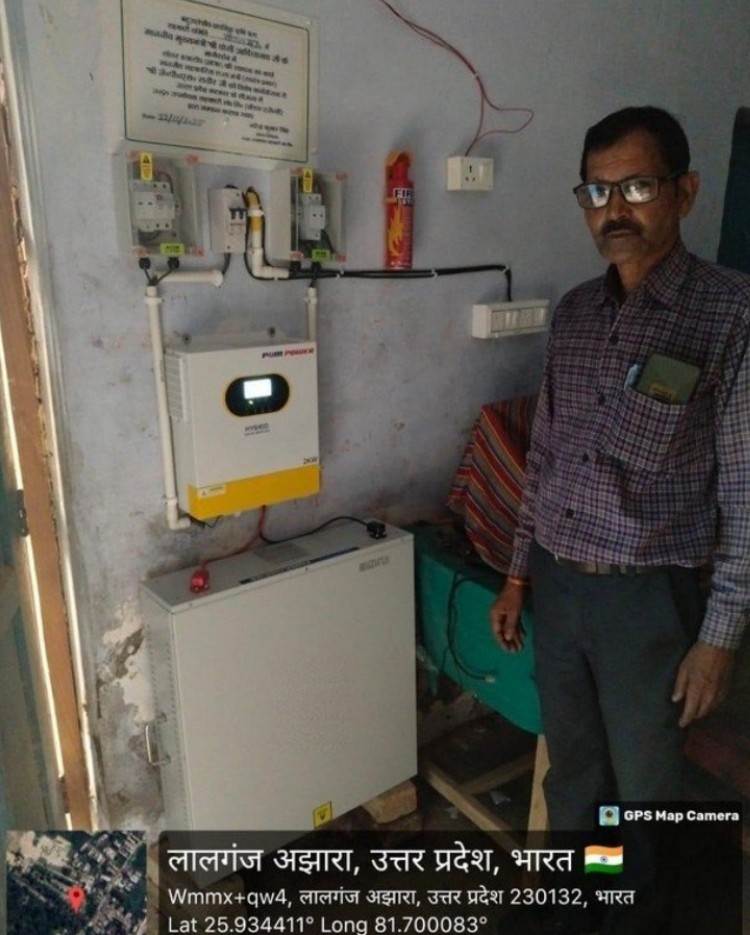
1. Lalganj Ajhara, Pratapgarh District
- Configuration: Wall-mounted hybrid inverter with floor-standing LFP battery enclosure.
- Features: Standard conduit runs, clean vertical cable routing, mounted handover plaque above.
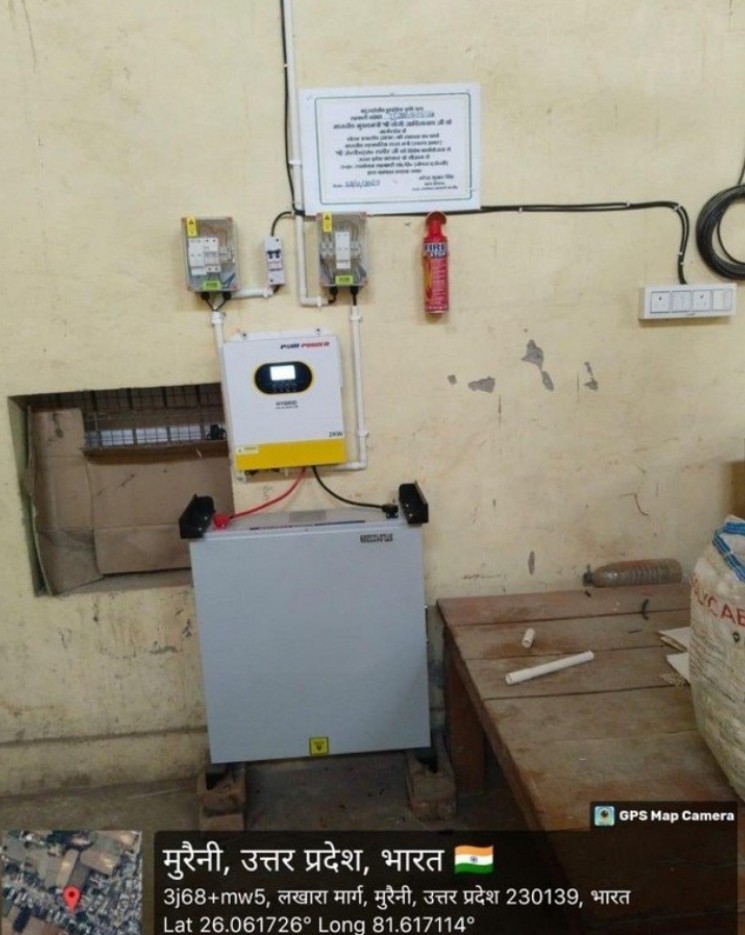
2. Muraini, Pratapgarh District
- Configuration: Identical mounting geometry and safety isolators adapted to rough brick masonry.
- Features: Strict cable gland sealing and independent earth pit connections.
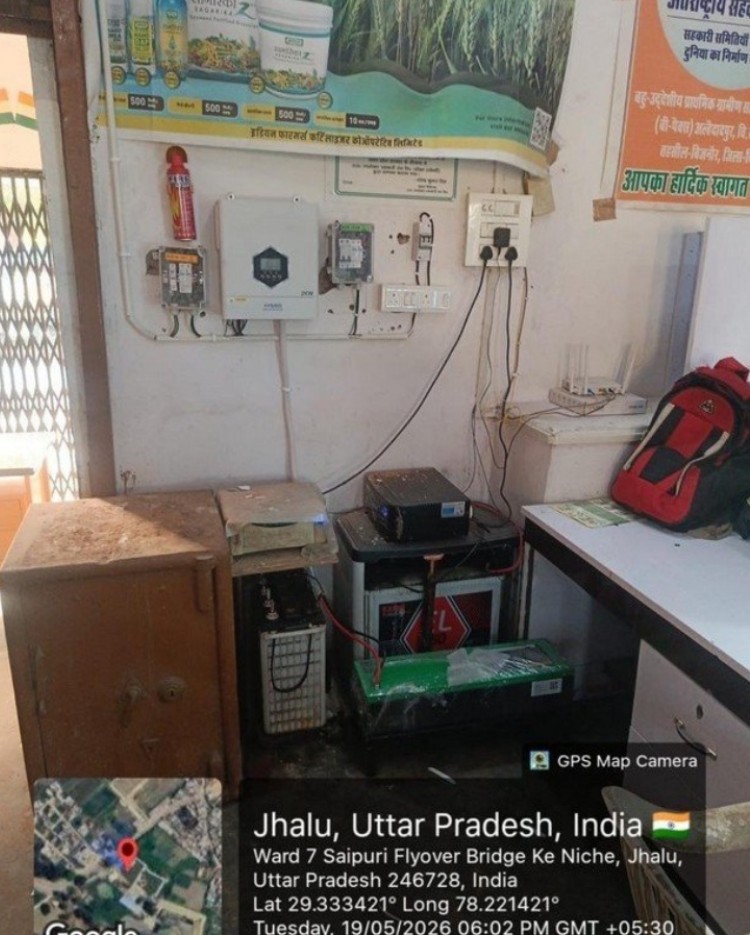
3. Jhalu, Bijnor District (600 km North)
- Configuration: Retrofit into an active, occupied cooperative banking office.
- Features: Flush-mounted enclosure, zero floor wire clutter, and tamper-resistant AC/DC disconnects.
(High-resolution, unredacted photographs with verified GPS coordinates and site registers are available for inspection by procurement and engineering teams under mutual agreement.)
Available for technical and commercial review
We do not ask clients or consultants to accept marketing statements on faith. We maintain an auditable evidence archive that prospective clients and lenders can review prior to contracting:
Site Master Register
Complete 1,000-site record with GPS and dates.
Geo-Tagged Photo Index
Time-stamped commissioning photos for every unit.
Signed Test Checklists
Insulation resistance, cold loop, and voltage logs.
Handover Certificates
Formal client completion sign-offs and plaque photos.
Factory QA & Test Data
Cell sorting records, weld pull tests, and Hi-Pot.
Warranty & SLA Dossier
Written terms, MTTR metrics, and local spares logs.
“We would rather be audited than believed.”
Intellectual honesty in our engineering claims
The Terragreen Brand Book mandates strict accuracy. Experience in one application does not automatically establish credentials in another. We state plainly what this 1,000-site record proves, and where we validate performance through tailored engineering reviews:
| What this record proves | What it does NOT prove |
|---|---|
| Proven The ability to execute 1,000 complex installations across a wide geography to a single standard. | Does not prove Operating performance in Tier-III/IV data centres or mega-scale utility solar parks. |
| Proven Highly disciplined supply-chain tracking, batch traceability, and component QA. | Does not prove Specific energy savings or financial payback on your facility's unique commercial tariff. |
| Proven Field resilience of LFP packs and inverters under high ambient heat (+45 °C) and weak rural grids. | Does not prove Projects delivered by Terragreen as the prime commercial contractor (delivered by sister company Zyntra). |
| Proven Repeatable cluster operations and standardized commissioning procedures. | Does not prove Telecom tower multi-tenant DC rectifier interfaces (proven via client-specific pilots). |
How this delivery capability translates across sectors
Terragreen brings this proven execution framework to commercial, industrial, and infrastructure clients across India:
For Commercial & Industrial (C&I) Plants
Standardized mechanical assembly, robust industrial balance-of-plant cabling, and high-ambient thermal performance.
15-minute interval load profiling, plant bus integration, and custom C&I solar-plus-storage engineering.
For Telecom Infrastructure Portfolios
Managing distributed, unmanned remote sites along tough logistical corridors on weak grids.
Direct 48 V DC power plant integration, SMPS coordination, and dedicated tower portfolio O&M.
For Data Centres & Critical Facilities
Rigorous quality assurance, documented test gates, and reliable component traceability.
Tier-compliant electrical redundancy modeling, UPS parallel bus engineering, and custom critical-power workshops.
Verify our engineering before signing a contract
We invite asset managers, procurement heads, and energy consultants to evaluate our capability directly:
Visit the Manufacturing Campus
Take a technical walkthrough of Zyntra's 36,421 m² facility in Pune—review incoming cell grading, automated laser welding, six QA test gates, and container fabrication.
Audit the 1,000-Site Register
Review our master database, geo-tagged photo records, and commissioning logs with our engineering team.
Run a Controlled Field Pilot
For multi-site portfolios, nominate 5 to 20 candidate sites to test hardware performance, installation quality, and remote telemetry on your own network.
Review the deployment data with our engineering team
Arrange an audit session or request access to the technical documentation dossier for the 1,000-site rollout.