
Commercial and industrial solar EPC
High grid tariffs, time-of-day surcharges, and power cuts affect plant operating margins. Terragreen engineers captive ground-mounted and on-site solar systems sized directly from your facility's 15-minute load curves. We deliver predictable power costs with clear economic models and one accountable team from design to commissioning.
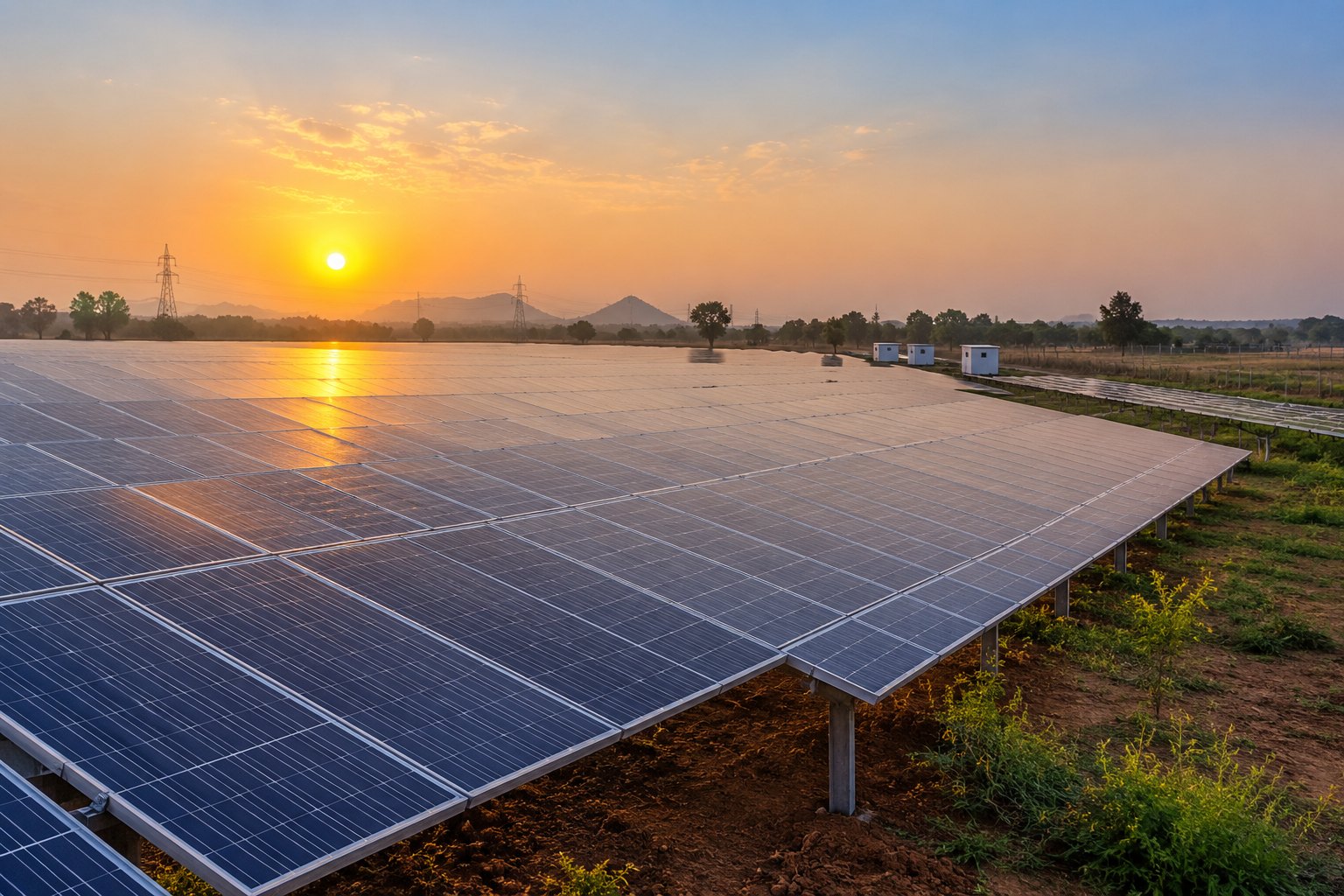
Built for facilities where power is a core operating cost
We work with manufacturing plants, continuous process industries, cold chains, foundries, automotive facilities, and commercial campuses operating under HT industrial tariffs.
High baseload consumption
Plants consuming over 100,000 units (kWh) per month seeking to reduce reliance on grid slabs.
Available land or roof perimeter
Industrial properties with unshaded ground parcels, open internal yards, or factory roof complexes.
Operating cost pressure
CFOs and plant heads seeking to establish predictable cost-per-unit metrics over a 25-year asset lifecycle.
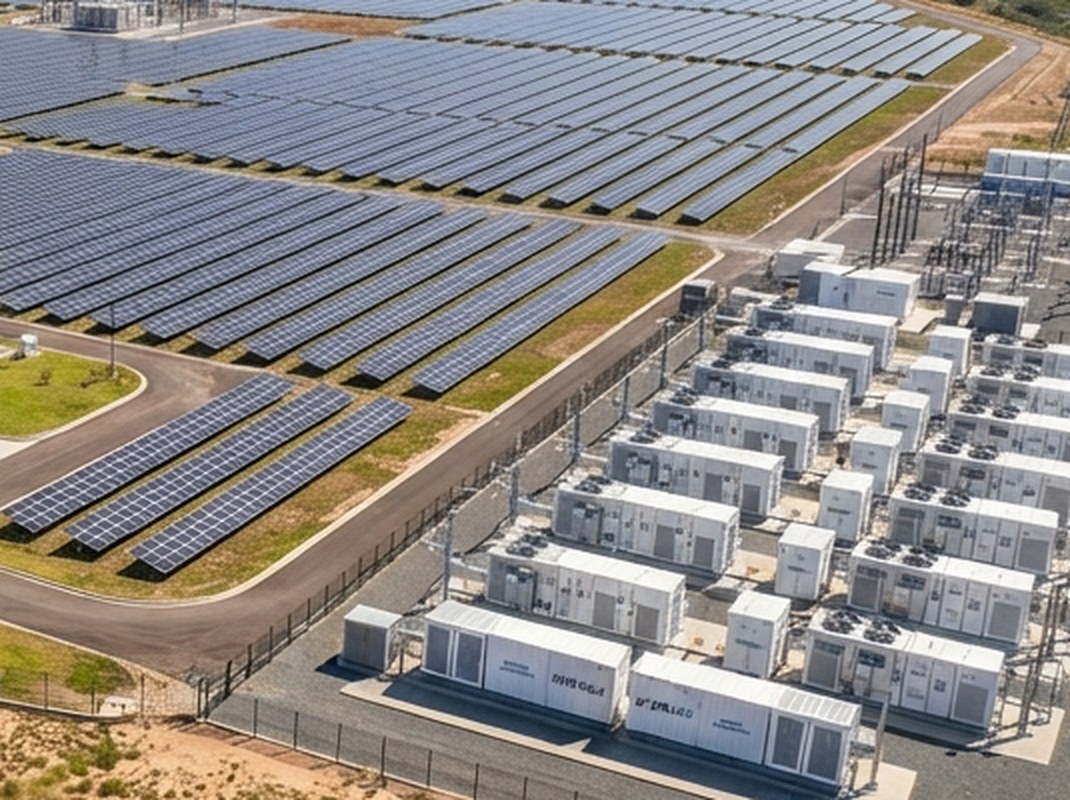
Energy that stays on.
We deliver predictable power costs with clear economic models and one accountable team from design to commissioning.
Engineered around your plant bus, not standard templates
A factory electrical system is complex. Inductive motor loads, harmonic distortions from variable frequency drives (VFDs), and sensitive equipment demand careful electrical design. We do not place standard solar setups onto industrial sites without verifying protection coordination.
Hourly Load Profiling and Sizing
We map solar generation curves against your shift timings. If your facility runs two shifts, we size the array to maximize direct self-consumption during peak tariff daylight hours, avoiding grid export penalties where net metering is restricted.
Interconnection at the Main Plant Bus
We evaluate your existing switchgear, short-circuit fault levels, and transformer capacities. Interconnection is engineered at your existing LT bus (415 V) or stepped up to the plant HT yard (11 kV / 33 kV) with matching protection relays and isolation breakers.
Reverse Power and Zero-Export Controls
Where local distribution companies do not permit grid feeding, we implement digital fast-acting zero-export controllers that throttle inverter output within 200 milliseconds of a sudden load drop, protecting your generators and remaining fully compliant.
Safety and System Grounding
Industrial environments require robust safety engineering. Our designs incorporate dedicated equipment earthing, chemical earth pits tested to IEEE 80 standards, coordinated surge protection devices (SPDs), and Class-A fire safety clearances around all electrical equipment.
How we quantify your energy cost reduction
Terragreen does not publish generic savings claims or promise unverified percentage drops. Every commercial proposal contains an explicit financial calculation based on your actual billing history and tariff structure.
| Esolar | Solar and stored energy consumed on site (kWh/year) |
| Tavoided | Net avoided grid tariff per unit (INR/kWh) |
| ΔD | Contract demand charge reduction (INR/year) |
| Cm | Monthly meter / fixed interconnection charges (INR/year) |
| Crunning | Annualized O&M and operational expenses (INR/year) |
Figures and formulas on this page are indicative and non-binding estimates. See the Disclaimer.
Modelled inputs (stated upfront)
25-year solar degradation rates (0.5% per year), module soiling factors, seasonal insolation, and local HT tariff escalation assumptions.
Measured baseline (from your data)
12 months of utility electricity bills, recorded peak demand (kVA) breaches, time-of-day (ToD) tariff distribution, and DG fuel logs.
Outcome guarantee
Performance ratios (PR) are tested and documented during formal commissioning against agreed contract standards.
Scope delineation for C&I projects
To prevent project delays and scope friction between plant maintenance teams and contractors, our scope is established in writing:
| Milestone / deliverable | Terragreen scope | Customer scope |
|---|---|---|
| Site Assessment | Topographical survey, geotechnical soil testing, shadow analysis, electrical audit. | Providing site boundary drawings, structural drawings, and 12-month billing data. |
| Approvals & Permits | Preparing drawings for CEIG, discom net-metering / open-access application filings. | Signing statutory applications, paying official statutory/utility fees. |
| Supply Chain | Modules, inverters, structures, HT/LT panels, cables, and earthing materials. | Providing secure, covered storage space on site during construction. |
| Installation | Civil foundations, module mounting, cable trenching, termination, and labelling. | Providing plant shutdown windows for interconnection and busbar tie-in. |
| Commissioning | Cold loop testing, relay testing, grid synchronization, trial run, and PR test. | Witnessing commissioning tests and signing the formal handover document. |
Questions plant engineers and finance heads ask
Should we choose ground-mounted solar or rooftop solar for our factory?
That depends on roof loading capacity, age, and available land. If you have unshaded land within or adjacent to your facility, ground-mounted systems offer easier maintenance access and higher ventilation efficiency. If ground space is reserved for manufacturing expansion, a reinforced rooftop system is generally preferred. We inspect both during our site survey.
Do we need battery energy storage with our C&I solar plant?
If your factory runs primarily during daylight hours on a stable grid, a grid-tied solar plant delivers the shortest payback. If your facility experiences daytime voltage fluctuations, expensive peak-demand surcharges, or power cuts requiring diesel generator support, adding storage protects critical equipment and displaces diesel. We model both scenarios side-by-side.
How does Terragreen handle grid synchronization when our backup diesel generators are running?
We install PV-DG controllers that coordinate inverter output with your diesel generator governors. The controller maintains a minimum generator load (typically 30% to prevent engine wet-stacking) while using maximum available solar power to reduce diesel consumption.
Sizing a solar plant for your facility
Send us 12 months of electricity bills and an hourly load profile. Our engineering team will return a site-specific design basis and an indicative cost model.