
Rooftop solar for factories and commercial buildings
Industrial rooftops represent prime generation assets, but installing solar cannot compromise factory safety, roof weatherproofing, or floor operations. Terragreen delivers rooftop solar EPC based on structural audits, wind-load engineering, and clean plant-bus integration. We build durable rooftop systems that lower daytime power costs without interrupting production.
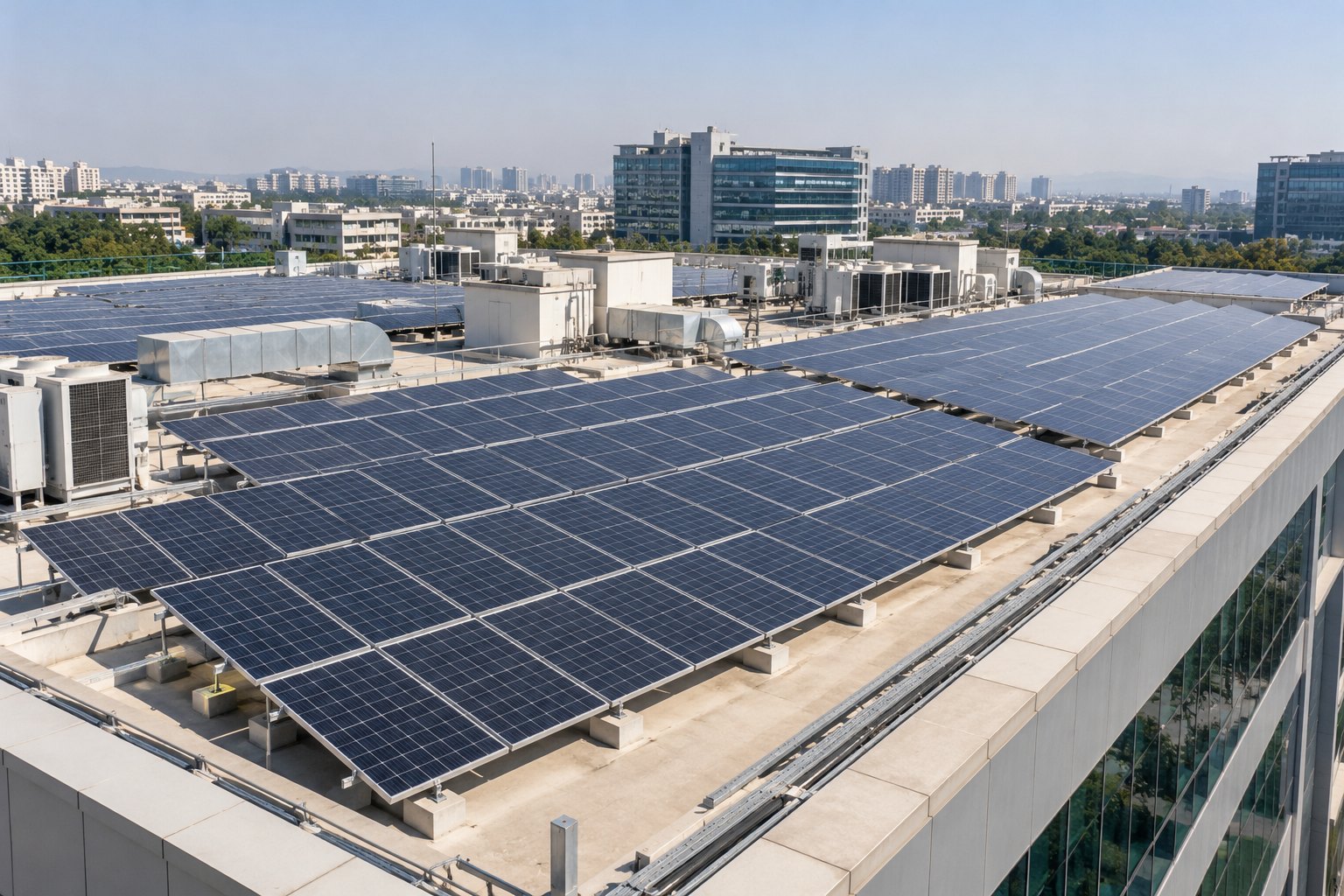
Structural integrity and weatherproofing before array design
Industrial roofs face harsh operational conditions: vibration from internal machinery, ambient chemical fumes, thermal expansion, and wind uplift along eaves. We never install panels without completing a technical roof assessment.
Structural Load and Purlin Capacity
We calculate dead loads (typically 12–15 kg/m² for modules and mounting) and dynamic wind uplift against your building's existing structural drawings. Purlin spacing, truss strength, and roof slope are checked before confirming plant capacity.
Non-Penetrative and Ballasted Mounting
- Trapezoidal / standing seam metal roofs: certified aluminium clamps engineered to grip the sheet seams directly. No through-roof drilling is conducted on standing seams, preserving your roof warranty and water tightness.
- RCC concrete roofs: elevated pre-cast concrete ballast blocks or anchored structures that do not pierce the waterproofing membrane.
- Corrosion resistance: all mounting hardware uses anodized aluminium (minimum 15 microns) and SS304/SS316 fasteners rated to resist industrial corrosion.
Rooftop Walkways and Operation Safety
Industrial plants require routine roof access. Terragreen designs dedicated anti-skid walkways, lifeline fall-arrest systems, handrails around skylights, and designated module cleaning access lanes across the array.
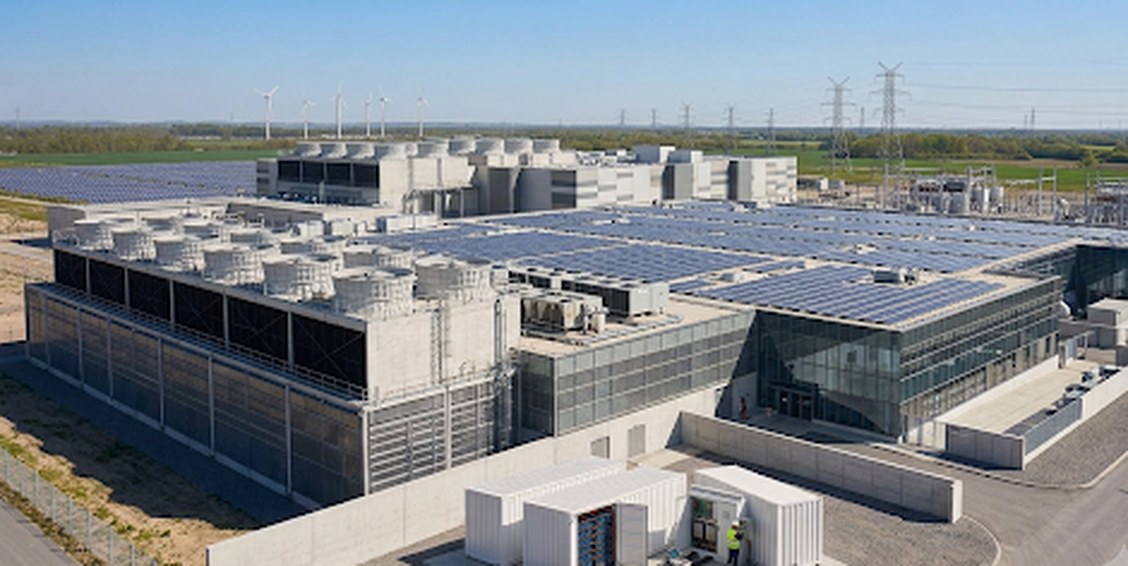
Energy that stays on.
We build durable rooftop systems that lower daytime power costs without interrupting production.
Safe integration with your internal distribution network
Rooftop solar arrays place high-voltage DC circuits directly over your factory floor. Safety engineering must protect personnel and physical assets below.
Rapid DC Shutdown
In compliance with modern industrial electrical standards, inverters and string combiners include rapid shutdown capability to de-energize rooftop DC voltages down to safe levels during maintenance or emergency response.
External Riser Routing
DC and AC cables are carried along external building risers in heavy-duty galvanized cable trays, keeping high-voltage lines off internal production floors.
Inverter Placement
String inverters are wall-mounted in well-ventilated, shaded utility areas or dedicated ground shelters for safe maintenance access.
Self-consumption and critical-load backup
Most factories pay high commercial tariffs for grid energy. Every unit of solar power consumed on site displaces a unit bought from the grid at retail rates.
Direct plant self-consumption
Sized so that 90% or more of solar electricity is consumed directly by factory machinery, minimizing dependency on net-metering export policies.
Adding storage for outage backup
If your site experiences frequent grid trips that halt production lines, we integrate a battery energy storage system sized to support your critical loads.
Explore our commercial and industrial battery storageClear delivery boundaries for factory installations
| Work package | Terragreen responsibility | Facility owner responsibility |
|---|---|---|
| Roof Audit | Structural analysis, shadow profiling, water-leakage inspection. | Structural drawings and roof age/warranty records. |
| Safety Equipment | Installing safety lifelines, walkways, skylight mesh, and earthing. | Ensuring factory safety orientation for installation crews. |
| Installation | Mounting structures, module assembly, cabling, and inverter wiring. | Unobstructed roof access and scheduled crane/lift windows. |
| Interconnection | Inverter output cabling, AC distribution panel, LT breaker integration. | Providing connection points on the plant LT switchboard. |
| Discom Approvals | Meter testing, CEIG approvals, and net-metering synchronization. | Supplying utility account documents and processing statutory fees. |
Frequently asked questions about industrial rooftop solar
Will installing solar void our metal roof manufacturer's warranty?
No, provided non-penetrative mounting clamps are used. We utilize engineered seam clamps that grip the standing seam ribs without drilling into the sheet. For screw-down trapezoidal profiles, we use EPDM-gasketed brackets fixed directly to the underlying purlins, keeping the waterproofing intact.
How do we clean and maintain the rooftop solar panels?
We engineer pressurized water piping with quick-connect valves across your roof perimeter during installation. Safe, anti-skid walkways are installed between panel rows so maintenance staff can clean modules safely. Ongoing cleaning and thermography inspections can also be managed under our Solar O&M Service.
Can our roof handle the weight of a solar plant?
A typical crystalline solar installation adds 12 to 15 kg per square meter of dead load. During our initial site assessment, our civil engineers check your structural drawings and purlin loading against local wind speed requirements (IS 875). If certain roof sections lack required load margins, we reconfigure the layout to stronger structural spans.
Plan a rooftop solar survey for your plant
Share your facility address, roof area, and a recent electricity bill. Our engineers will review satellite imagery, evaluate structural viability, and provide an initial layout.